
Reusable cups only become workable when cleaning is properly organized
The challenge usually isn’t the reusable cup itself, but the process around it.
Recognizable?
-
Cups pile up around desks, in meeting rooms, or near coffee machines.
-
Every used cup ends up with the catering or facility team.
-
If cleaning takes too much effort, employees prefer to grab a new cup.
-
The investment in reusable cups is not just the purchase, but also the cleaning and labor costs.
The three most commonly used cleaning methods
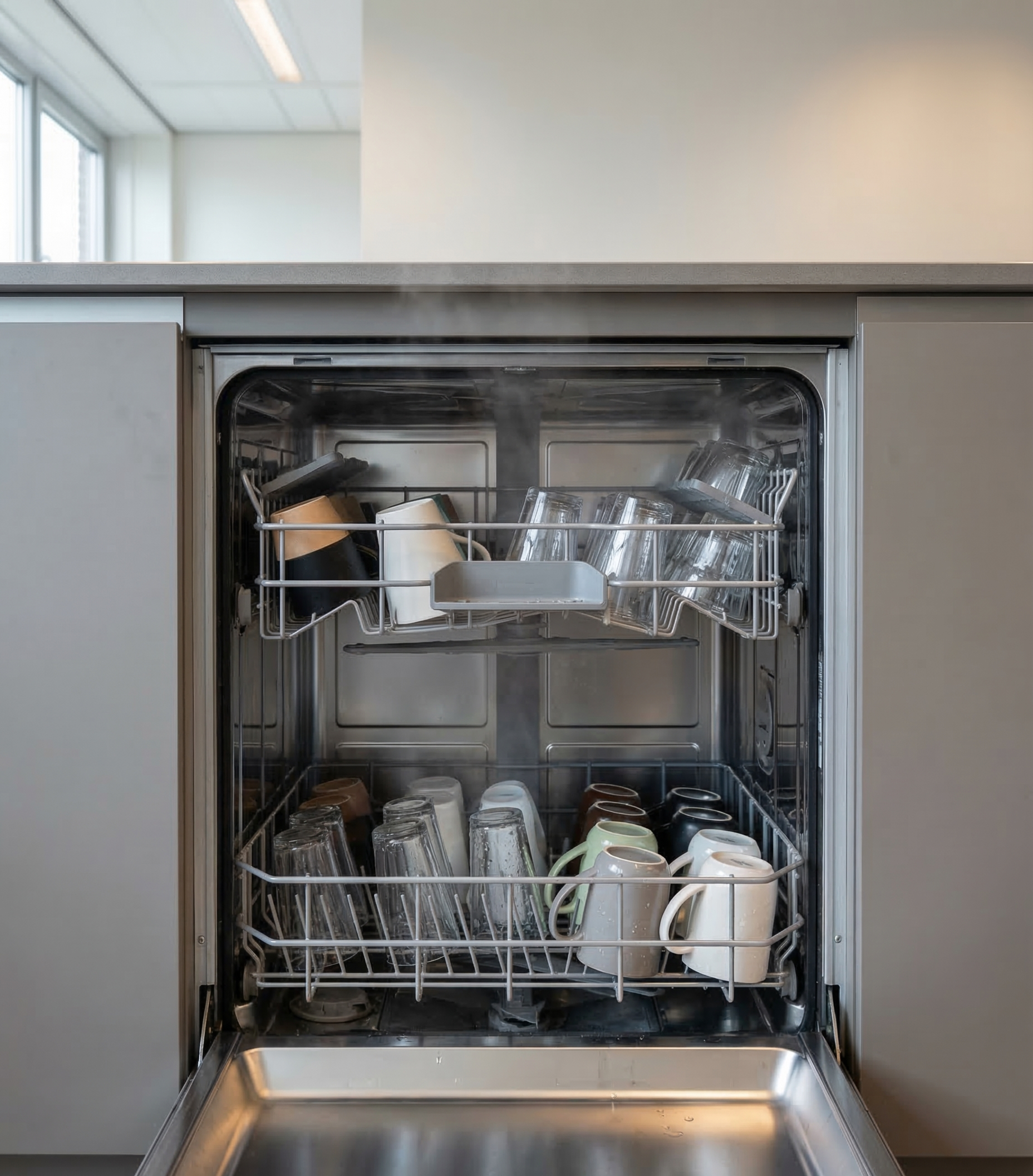
The dishwasher
+ Accesible
+ Suitable for more than just cups.
- Extra work
- Lack of ownership
- Long washing cycles
- Limited capacity
-
+ Often already available on-site and easy for employees to use
+ Suitable for tableware
- Extra work for employees, cleaning staff, and/or facility teams
- Employees don’t feel responsible for loading and unloading
- Long washing cycles, leading to the use of additional cups
- Limited capacity, causing used cups to pile up
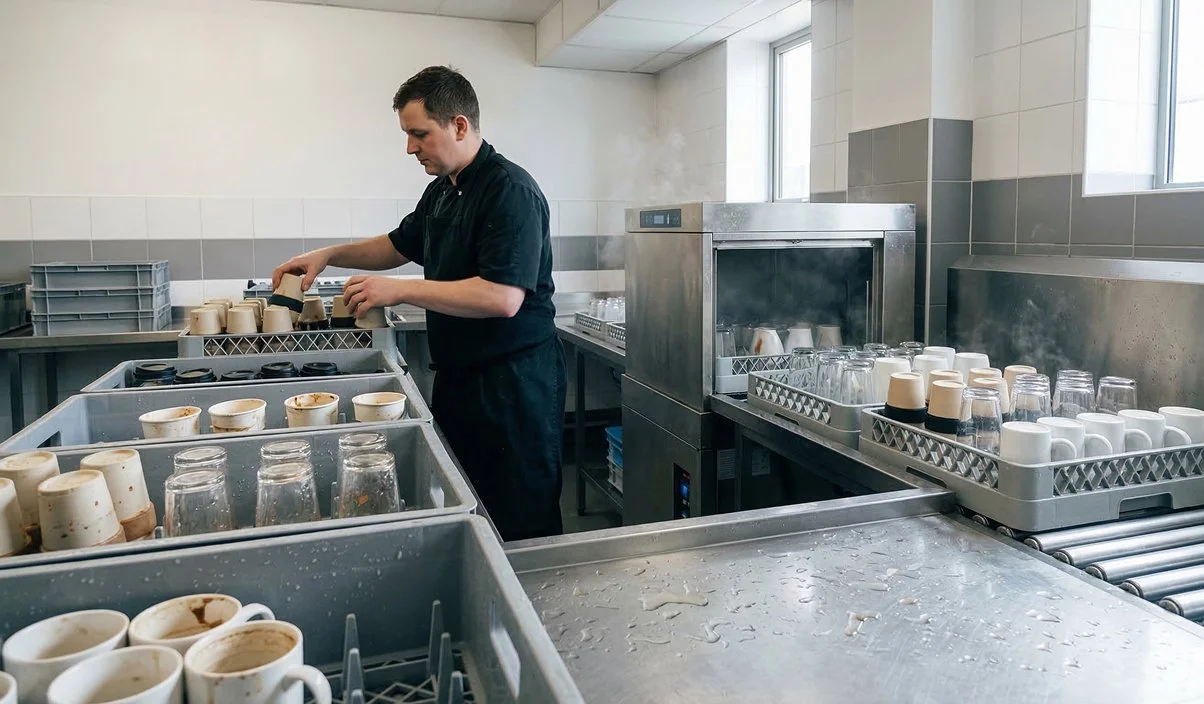
Internal washing facility
+ Relieves employees
+ Handles larger volumes
- Additional logistics and costs
- Increased pressure
- Encourages grabbing a new cup
-
+ Employees are relieved from maintaining their own cups
+ Suitable for larger volumes and more than just cups
- Additional logistics and costs for collecting, cleaning, transporting, and returning cups
- Increased pressure on catering and facility teams, especially during peak moments
- Because employees can easily return their cups, it becomes normal to use multiple cups per day
External collection service
+ No additional workload
+ Easy return of cups
- Encourages grabbing a new cup
- Higher rejection rate of cups
- High costs
- Environmentally impactful
-
+ No additional workload for catering and the washing facility
+ Employees can easily return their cups, making it practical for them
- Because employees can easily return their cups, it becomes normal to use multiple cups per day- As used cups sit longer in collection bins, residue builds up, leading to higher rejection rates
- High costs, averaging around €0.10 per cup
- Collection, transport, and return create additional environmental impact due to logistics
Rinse&Go doesn’t replace these methods, but makes them more workable.
How we add value
With the dishwasher
Rinse&Go helps to quickly rinse cups in between uses, so fewer cups go directly into the dishwasher and the pressure on pantry space, capacity, and buildup is reduced.
With the internal washing facility
Rinse&Go helps reduce the number of cups going directly into the central washing flow, decreasing collection, handling, and peak load in the washing facility.
With the external collection service
Rinse&Go makes it more natural to use the same cup longer throughout the day, so fewer cups move through the logistics chain and return flow each day.
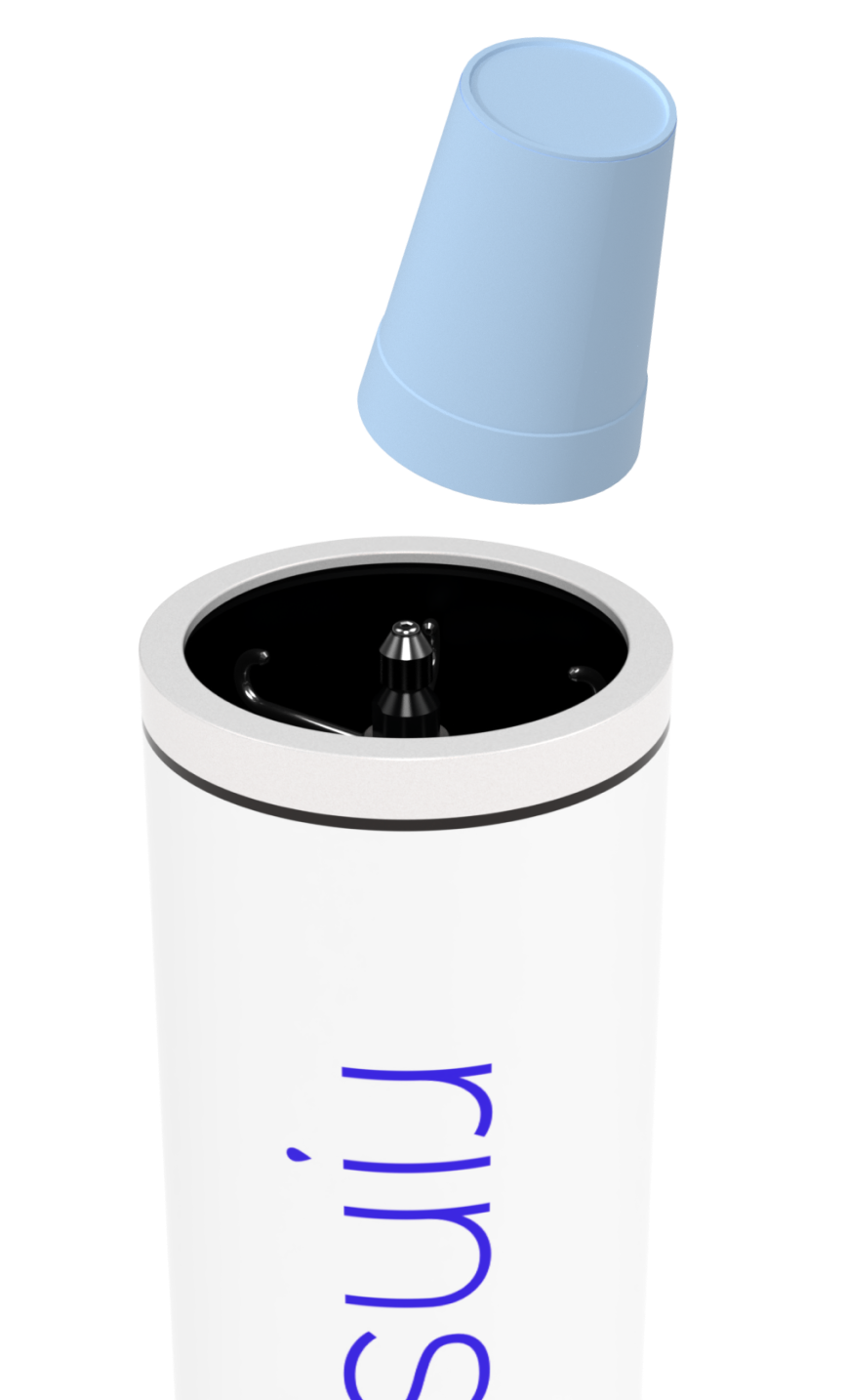
That’s how easy it is
A clean cup with Rinse&Go
Step 1
Place your cup in the station
Step 2
Press for two seconds
Step 3
Enjoy a clean cup
Sustainability
The most sustainable way to maintain your reusable cup
A reusable cup is only truly sustainable if it’s easy to reuse. With less water and without additional resources.

Less water
Per rinse, Rinse&Go uses 70% less water than a dishwasher and up to 80% less than rinsing under the tap.
No additional resources
No hot water, cleaning agents, or electricity required. Rinse&Go operates entirely mechanically using water pressure.

The sustainability benefits of reusable cups increase the more often the same cup is used.
Longer lifespan
Low-threshold testing
Want to discover how Rinse&Go works in your organization?
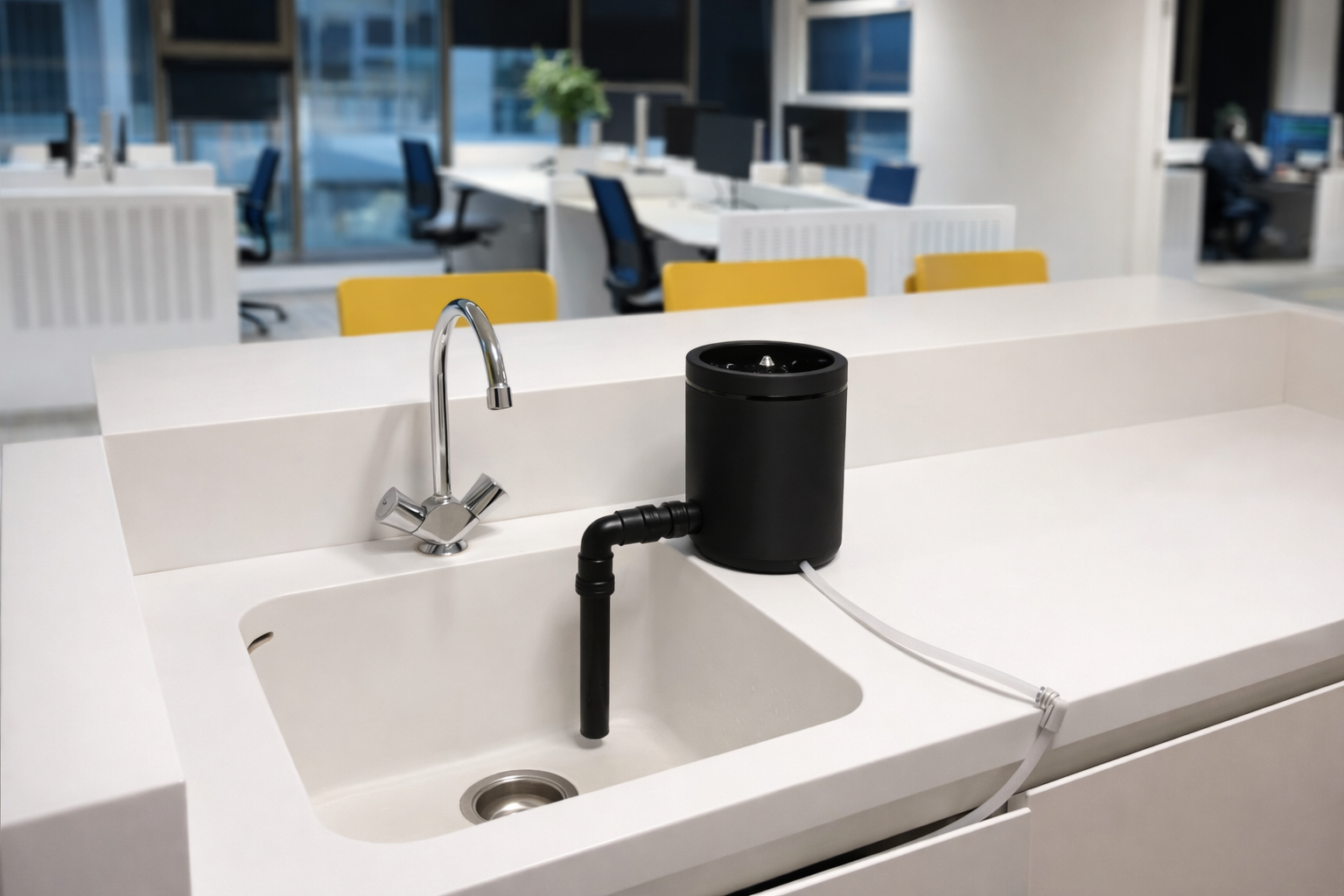
In many cases, a pilot of about one month is already enough to see the impact on the pantry, user behavior, and reuse. This allows you to experience the benefits in practice in a low-threshold way, without major adjustments to the pantry.
Before starting, we define a few practical points:
A clear pilot objective
Placement in a high-traffic, logical location
An evaluation moment with a potential next step
This way, you can first experience the impact in your pantry without immediately committing to a larger rollout.
FAQ
Is your question not listed here?
Then get in touch with us.
-
Rinse&Go facilitates in-between rinsing, allowing cups to be reused more often. For hygienic cleaning, cups will still need a full wash on a regular basis.
-
When rinsing is quick and easy, employees are more likely to reuse their cup. This reduces the number of cups in circulation and lowers the associated workload and costs.
-
Rinsing under the tap quickly leads to a wet and messy pantry and isn’t always easily accessible where cups are used. Rinse&Go is specifically designed to be placed flexibly in logical locations and rinses away taste and odor residues from milk, coffee, and other drinks within seconds, using as little water as possible.
-
Yes, Rinse&Go works with almost all common cups and mugs, such as glass, ceramic, plastic, stainless steel, and most bottles. The system is specifically designed to make reuse easy for the cup someone already uses.
No-obligation introduction
Let us take a look at how this works in your organization
In a short, no-obligation demo, we’ll show where Rinse&Go adds value within your setup. Leave your details and we’ll get in touch to schedule an on-site demo.